Is AI ruining our skills? Early results are in and they're not good
Is AI ruining our skills? Early results are in — and they’re not good
Thank you for visiting nature.com. You are using a browser version with limited support for CSS. To obtain the best experience, we recommend you use a more up to date browser (or turn off compatibility mode in Internet Explorer). In the meantime, to ensure continued support, we are displaying the site without styles and JavaScript.
Advertisement


- NEWS
- 18 June 2026
Is AI ruining our skills? Early results are in — and they’re not good
Reliance on artificial-intelligence tools degrades the abilities of physicians and software engineers, studies show.
By
1. Mariana Lenharo 1. Mariana Lenharo is a reporter for _Nature_ in New York City.
Search author on:PubMedGoogle Scholar
- [Email](mailto:?subject=Is%20AI%20ruining%20our%20skills?%20Early%20results%20are%20in%20%E2%80%94%20and%20they%E2%80%99re%20not%20good&body=https%3A%2F%2Fwww.nature.com%2Farticles%2Fd41586-026-01947-1)
- Bluesky
- X
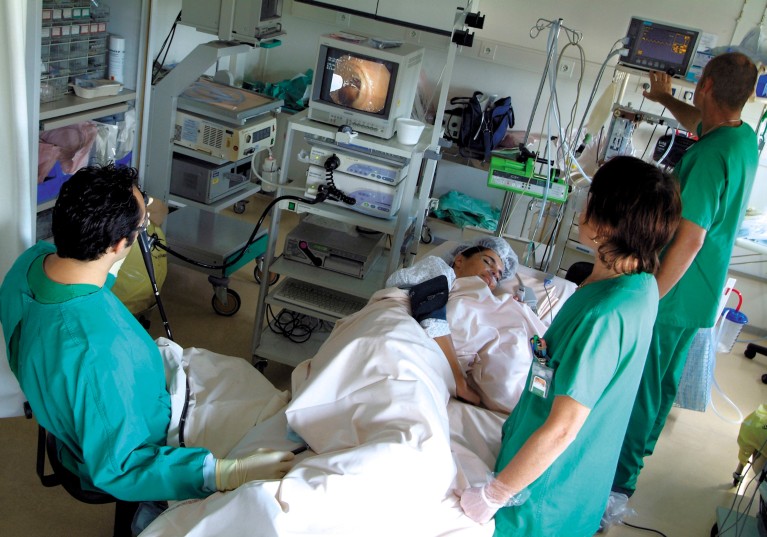
Physicians’ own ability to spot pre-cancerous growths during colonoscopies declined after they had grown accustomed to using an artificial-intelligence tool to help with the task.Credit: Gabrielle Voinot/Look at Sciences/Science Photo Library
As more professionals begin to rely on artificial-intelligence tools in their work, could their hard-earned skills atrophy?
That possibility is a growing concern for medical specialists, computer scientists and other workers. Seventy per cent of nurses and 77% of physicians, for example, are worried about losing their skills because of over-reliance on AI systems, according to a survey of US health-care workers published earlier this month1.
Their fear might be justified. Evidence suggests that AI-driven ‘deskilling’ is starting to happen in medicine, computer science and other fields. Researchers are now discussing how to preserve important human expertise in the age of AI.
“Just being aware that this phenomenon exists hopefully provokes some self-reflection about which skills people want to maintain and which they’re willing to outsource” to AI tools, says Kevin Crowston, an information scientist at Syracuse University in New York.
Spoiled by AI?
A study2 of physicians in Poland who specialize in endoscopy — the use of flexible probes to examine the inside of the human body — shows how quickly AI tools can erode human abilities. The physicians, who had all performed at least 2,000 colonoscopies during their careers, were given access to an AI system that analyses colonoscopy images in real time and flags a type of precancerous intestinal lesion called an adenoma. The tool was available to the specialists on some days but not on others.
Once physicians began using it, their performance dropped significantly whenever the system was unavailable. During the three-month period before the AI tool was introduced, the specialists found at least one adenoma during 28.4% of colonoscopies. During the three-month period after the tool was introduced, the adenoma detection rate for colonoscopies performed without AI assistance decreased to 22.4%.
 The findings, published last October in _The Lancet Gastroenterology and Hepatology_, suggest that even highly skilled professionals might get worse at tasks that their job requires as they become more dependent on AI tools, says Robert Wachter, a physician at the University of California, San Francisco, who is the author of a book on how AI tools are transforming health care. The study authors say that continuous exposure to such tools can cause clinicians to become “less motivated, less focused, and less responsible when making cognitive decisions without AI assistance”.
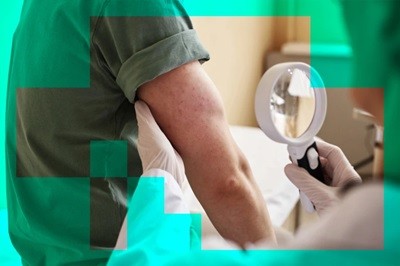
Co-author Yuichi Mori, a physician-researcher at the University of Oslo, says that more studies are needed to confirm the phenomenon. But people who use AI tools should be aware that they risk losing some of their skills, he adds. “There is no established solution against deskilling right now. It should be a very hot research topic in the next decade.”
No lesson learnt
To investigate whether skills are being lost in the field of computer science, researchers at the AI firm Anthropic in San Francisco, California, designed a randomized controlled trial in which 52 software engineers were asked to perform a basic coding task3. During the exercise, all 52 participants could search the web and access instructions on how to do the task. Half of the participants were prompted to use an AI assistant as well.
Enjoying our latest content?
Log in or create an account to continue
- Access the most recent journalism from Nature's award-winning team
- Explore the latest features & opinion covering groundbreaking research
Access through your institution
or


_doi: https://doi.org/10.1038/d41586-026-01947-1_
References
1. Wolters Kluwer. _Patients, Doctors, and Nurses on AI: Similar Tools, Different Pathways, One Destination_ (Wolters Kluwer, 2026).
2. Budzyń, K. _et al._ _Lancet Gastroenterol. Hepatol._**10**, 896–903 (2025).
3. Shen, J. H. & Tamkin, A. Preprint at arXiv https://doi.org/10.48550/arXiv.2601.20245 (2026).
4. Rinta-Kahila, T., Penttinen, E., Salovaara, A. & Soliman, W. In _Proc. 51st Hawaii Int. Conf. System Sci._ (ed. Bui, T. X.) 5244–5253 (HICSS, 2018).
Related Articles
- 

- 

- 

- 

Subjects
Latest on:
- 
- 
- 



- 
- 
- 


- 
- 
- 


!Image 22: Nature Careers

Jobs
Creation of advanced functional polymer materials (adhesive, self healing, and recycling).
Tsukuba, Ibaraki (JP)
National Institute for Materials Science (NIMS) !Image 23
Title: Associate/Senior Editor, Nature Communications (Human Behaviour team) Location: New York, Jersey City, Philadelphia, Berlin, Shanghai, Pune ...
New York City, New York (US)
Springer Nature Ltd !Image 24
Join HZAU's global faculty team to advance research with competitive benefits.
Wuhan, Hubei (CN)
Huazhong Agricultural University (HZAU) !Image 25
The Department of Medicine at Boston University, Bosmann Laboratory, is recruiting highly motivated Postdoctoral Fellows to work on projects in Imm...
Boston, Massachusetts (US)
BU Pulmonary !Image 26
NIBS invites applications from outstanding early-career scientists for the Independent Investigator Fellowship Program.
Beijing (CN)
National Institute of Biological Sciences, Beijing !Image 27
Related Articles
- 
- 
- 
- 
Subjects
Sign up to Nature Briefing
An essential round-up of science news, opinion and analysis, delivered to your inbox every weekday.
Email address
- [x] Yes! Sign me up to receive the daily _Nature Briefing_ email. I agree my information will be processed in accordance with the _Nature_ and Springer Nature Limited Privacy Policy.
Sign up
Close
!Image 33: Nature Briefing Sign up for the _Nature Briefing_ newsletter — what matters in science, free to your inbox daily.

Email address
Sign up
- [x] I agree my information will be processed in accordance with the _Nature_ and Springer Nature Limited Privacy Policy.
Close
Get the most important science stories of the day, free in your inbox.Sign up for Nature Briefing
Explore content
- Research articles
- News
- Opinion
- Research Analysis
- Careers
- Books & Culture
- Podcasts
- Videos
- Current issue
- Browse issues
- Collections
- Subjects
About the journal
- Journal Staff
- About the Editors
- Research Cross-Journal Editorial Team
- Journal Information
- Journal Metrics
- Our publishing models
- Editorial Values Statement
- Editorial policies
- Journalistic Principles
- History of Nature
- Awards
- Contact
- Send a news tip
Publish with us
Search
Search articles by subject, keyword or author
Show results from
Search
Quick links
Nature (_Nature_)
ISSN 1476-4687 (online)
ISSN 0028-0836 (print)
nature.com footer links
About Nature Portfolio
Discover content
Publishing policies
Author & Researcher services
- Reprints & permissions
- Research data
- Language editing
- Scientific editing
- Nature Masterclasses
- Research Solutions
Libraries & institutions
Advertising & partnerships
Professional development
Regional websites
- Privacy Policy
- Use of cookies
- Your privacy choices/Manage cookies
- Legal notice
- Accessibility statement
- Terms & Conditions
- Your US state privacy rights
 © 2026 Springer Nature Limited
