Faith and friction before the American Revolution
This piece was adapted from CT’s books newsletter. Subscribehere.

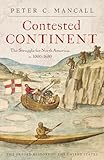
Peter C. Mancall, _Contested Continent: The Struggle for North America, c. 1000–1680_ (Oxford University Press, 2026)
Peter Mancall’s _Contested Continent_ is a prodigious synthesis of recent scholarship on early American history. As _Contested Continent_ demonstrates, historians increasingly view early North America on its own terms, without seeing the era as a prelude to American independence.
In the new model, early America is fundamentally a site of struggle between Indigenous people and European colonizers. Enslaved Africans take an increasingly prominent role as they arrived by the millions, especially in the 1700s. In the mid-20th century, many scholars saw colonial America as a seedbed of American national identity. Now historians such as Mancall avoid the issue of American nationalism, except to the extent that early America heralded the kinds of ethnic conflict that would mark much of US history.
Sign up for CT Books
Each issue contains up-to-date, insightful information about today's culture, plus analysis of books important to the evangelical thinker.
Email*
Sorry, something went wrong. Please try again.
What makes Mancall’s survey different from previous overviews such as Alan Taylor’s _American Colonies_ (2001) is that Mancall pushes the beginnings of early America back to around AD 1000, when Norse explorers began probing into far-eastern Canada. A lot happened between 1000 and the founding of Jamestown in 1607. Jamestown only appears halfway through _Contested Continent_, as a minor note amid a chapter on the “Little Ice Age” of the time period. To the general reader, Mancall’s early America will seem like an unfamiliar lost world more than preparation for “American” (i.e., English colonial East Coast) independence.

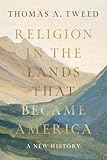
Thomas A. Tweed, _Religion in the Lands That Became America: A New History_ (Yale University Press, 2025)
Thomas Tweed’s _Religion in the Lands that Became America_ pushes the start of American religious history back even further than _Contested Continent_, to an episode that happened some 11,000 years ago. At a rock overhang near modern-day Waco, Texas, Paleo-Indians buried a middle-aged man and a girl. The grave, discovered in the 1970s, contained the largest number of items in a burial site from that era. The ritual objects included coyote-tooth pendants and ornamental turtle shells.
By opening and closing the book with the anecdote of this ancient burial, Tweed positions his survey against Sydney Ahlstrom’s classic_A Religious History of the American People_ (1972). Ahlstrom’s book used to be standard reading for graduate students in American religion, but it is now passé among academics due to its heavy focus on white Protestants.
Tweed’s eclectic survey is effectively an overview of American religion with Protestantism on the margins. In some cases, major evangelical figures are simply absent. Among the names and events not appearing in the index are Charles Finney, Dwight L. Moody, and Jimmy Carter. Also missing is the Azusa Street Revival of 1906 and its African American leader William Seymour. Azusa Street is usually seen as the beginning of the Pentecostal movement.
When evangelicals do appear, they are usually doing bad political things. They include the “anti-immigrant White evangelicals” who support President Donald Trump. _Religion in the Lands That Became America_ chiefly seeks to counter those who would argue, as Tweed puts it, that “America is—or should be—an Anglo-Saxon Protestant nation.”


Bernard Bailyn, _The Barbarous Years: The Peopling of British North America: The Conflict of Civilizations, 1600–1675_(Knopf Doubleday, 2012)
Bernard Bailyn’s _The Barbarous Years_ represents an older model in which European colonists remained the center of early American history. Bailyn, the great Harvard historian who died in 2020, placed early America and the American Revolution in Atlantic context in classic works including _The Ideological Origins of the American Revolution_ (1967).
With _The Barbarous Years_, Bailyn concluded a book series on European immigration that began with 1986’s _The Peopling of British North America_. The word _peopling_ appears in most of Bailyn’s titles on the subject. Historians such as Mancall would not use this term, since North America was long since “peopled” by Indigenous residents when Jamestown was founded. But in _The Barbarous Years_, Bailyn conceded he was really talking about a repeopling of British North America, after epidemic disease and war devastated native populations.
Even within European colonization, the English were only part of the story. By the 18th century, the number of English immigrants became negligible compared to those from Germany and Northern Ireland. Even in the early 1600s, there were settlers in America from across Continental Europe, representing the whole range of Christian traditions. They weren’t all Puritans or Anglicans.
The “barbarous years” were not times of triumph, either, but of “confusion, failure, violence, and the loss of civility.” Everyone involved—Europeans, Native Americans, and Africans alike—“felt themselves dragged down or threatened with descent into squalor and savagery.” To Bailyn, early America appeared like _The Lord of the Flies_ on a continental scale.
Thomas S. Kidd is research professor of church history at Midwestern Baptist Theological Seminary.